Last reviewed November 12, 2026 by Vancouver Picks Editorial Team
The short answer
For most Metro Vancouver homes, check your furnace filter every month during heating season (roughly October to April) and replace it when it looks grey or clogged. In practice that usually means:
| Filter type | Typical thickness | Usual replacement interval |
|---|---|---|
| Basic fibreglass | 1 inch | Every 30 days |
| Pleated (standard) | 1 inch | Every 1–3 months |
| Pleated (media cabinet) | 4–5 inches | Every 6–12 months |
| Washable / reusable | 1 inch | Rinse monthly, replace when damaged |
Always follow the interval printed on the filter and in your furnace manual. These are general ranges, not a substitute for the manufacturer's instructions.
Change it more often if...
- You have pets. Fur and dander load a filter quickly. Check every two to three weeks.
- Someone has allergies or asthma. A cleaner filter means less dust recirculating.
- You are renovating. Drywall dust can clog a filter in days. Swap it after any dusty job.
- Wildfire smoke season. In smoky summers many BC homeowners run the fan to filter indoor air; check the filter after smoky weeks.
- You run a heat pump with a central air handler. It moves air year-round, so the filter works year-round too.
Signs your filter is overdue
- The filter surface is grey, matted or you can't see light through it.
- More dust is settling on furniture than usual.
- Rooms heat unevenly or the furnace runs longer to reach temperature.
- The furnace shuts off on its own (a clogged filter can make it overheat and trip a safety limit).
- A dusty or burning smell when the heat comes on.
How to change a furnace filter, step by step
- Turn the thermostat off (or set the system to off) so the blower doesn't run.
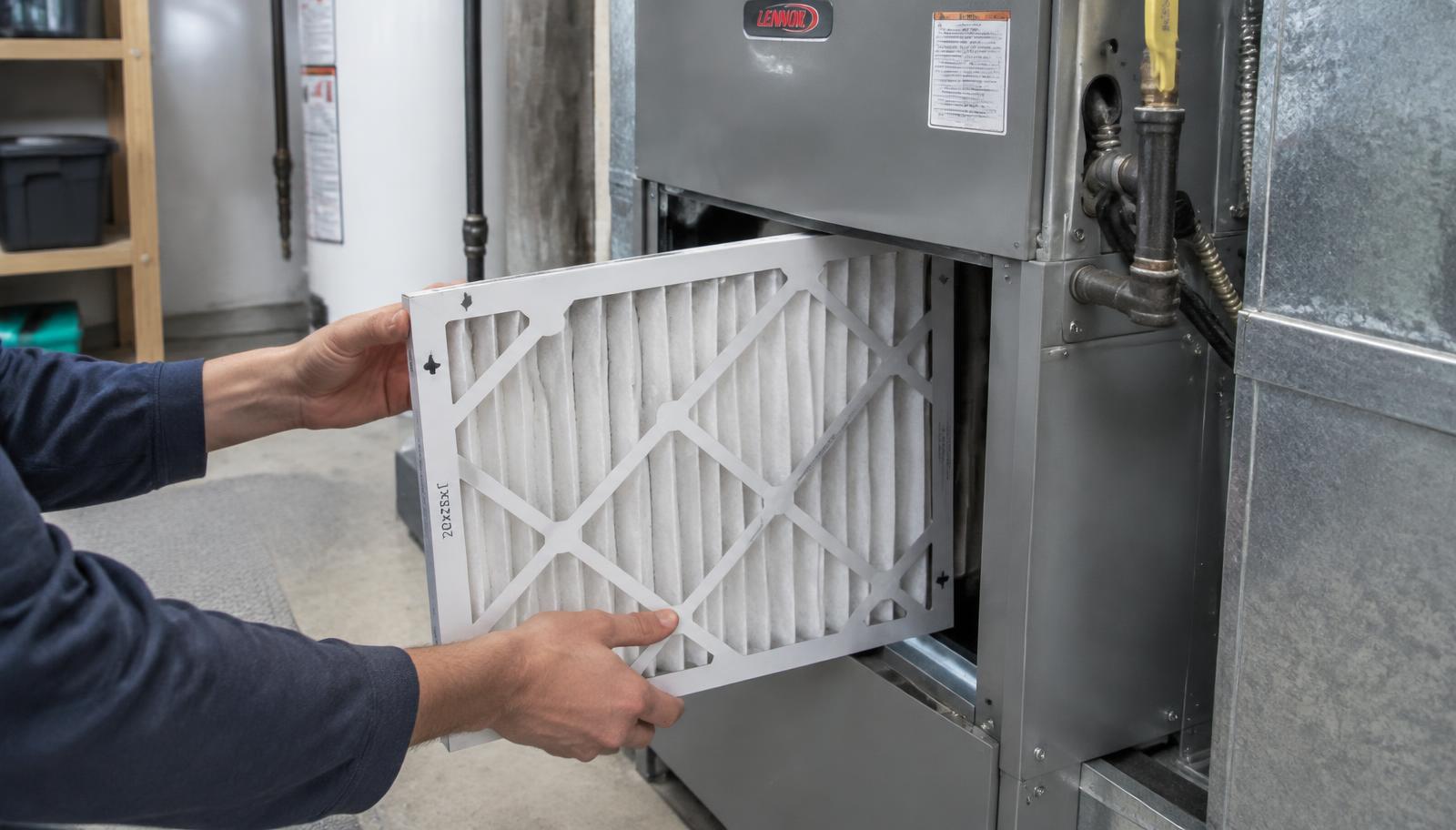
- Find the filter slot. It is usually between the return air duct and the furnace, behind a removable cover.
- Note the size and airflow arrow printed on the old filter's frame, for example 16×25×1.
- Slide the old filter out carefully and bag it to keep dust contained.
- Insert the new filter with the arrow pointing toward the furnace (the direction air flows).
- Replace the cover, turn the system back on and write the date on the new filter's frame.
Which filter should you buy?
Filters are rated by MERV (Minimum Efficiency Reporting Value). Higher numbers catch smaller particles but can restrict airflow. Many residential furnaces are designed for filters in the MERV 8–11 range, and some systems can't handle very dense filters. If you're unsure, ask your HVAC technician what your system supports before going higher.
Pair it with annual maintenance
A clean filter is the easiest job, but it doesn't replace a yearly furnace or heat pump service. A technician checks burners, safety controls, venting and airflow, which matters for both efficiency and carbon monoxide safety. Book it in early fall before the rush.
If your furnace still struggles with a fresh filter, it may need repair. You can request quotes from local HVAC companies using the form on this page.
Frequently asked questions
Can I run my furnace without a filter?
Only very briefly. Running without a filter lets dust coat the blower and heat exchanger, which can reduce efficiency and lead to repairs.
Does a higher MERV filter always mean better?
Not always. Very dense filters can restrict airflow on systems not designed for them. Check your furnace manual or ask a technician.
Do I need to change the filter in summer?
If your furnace fan, heat pump or central air conditioning runs in summer, yes. If the system is completely off, check it at the start of heating season.
Looking for hvac companies?
See hvac companies across Metro Vancouver →Related
How to Reduce Humidity in Your House (Vancouver Edition)
Vancouver's wet winters make indoor humidity one of the most common home problems here. These steps go from free habits to upgrades, so you can stop condensation and mould before they start.
Updated November 12, 2026GuideHow to Clean a Heat Pump: Indoor and Outdoor Unit Guide
Heat pumps are now one of the most common ways to heat and cool homes across Metro Vancouver. A little regular cleaning keeps them running efficiently. Here is what you can do yourself and what to leave to a technician.
Updated November 12, 2026